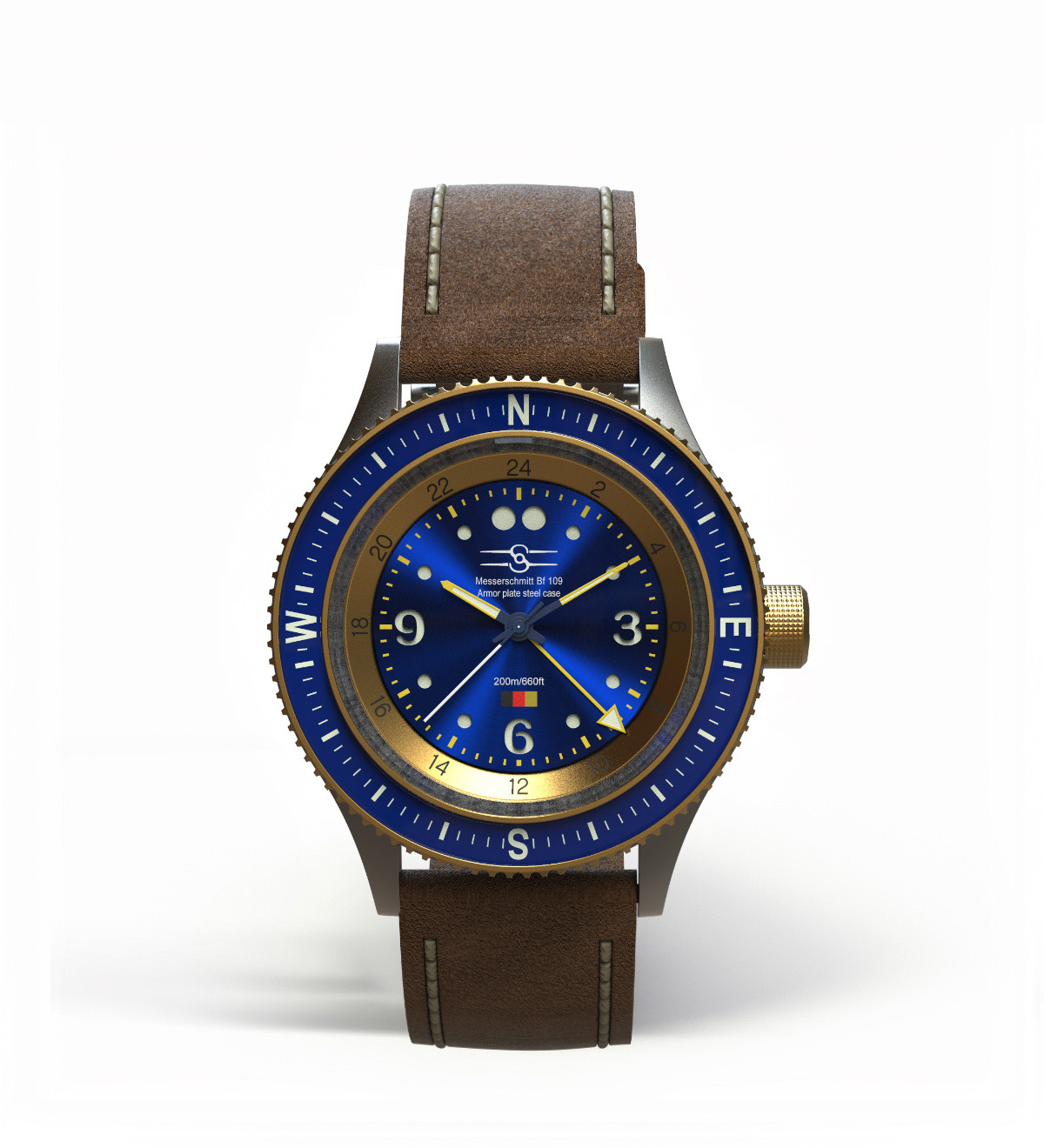
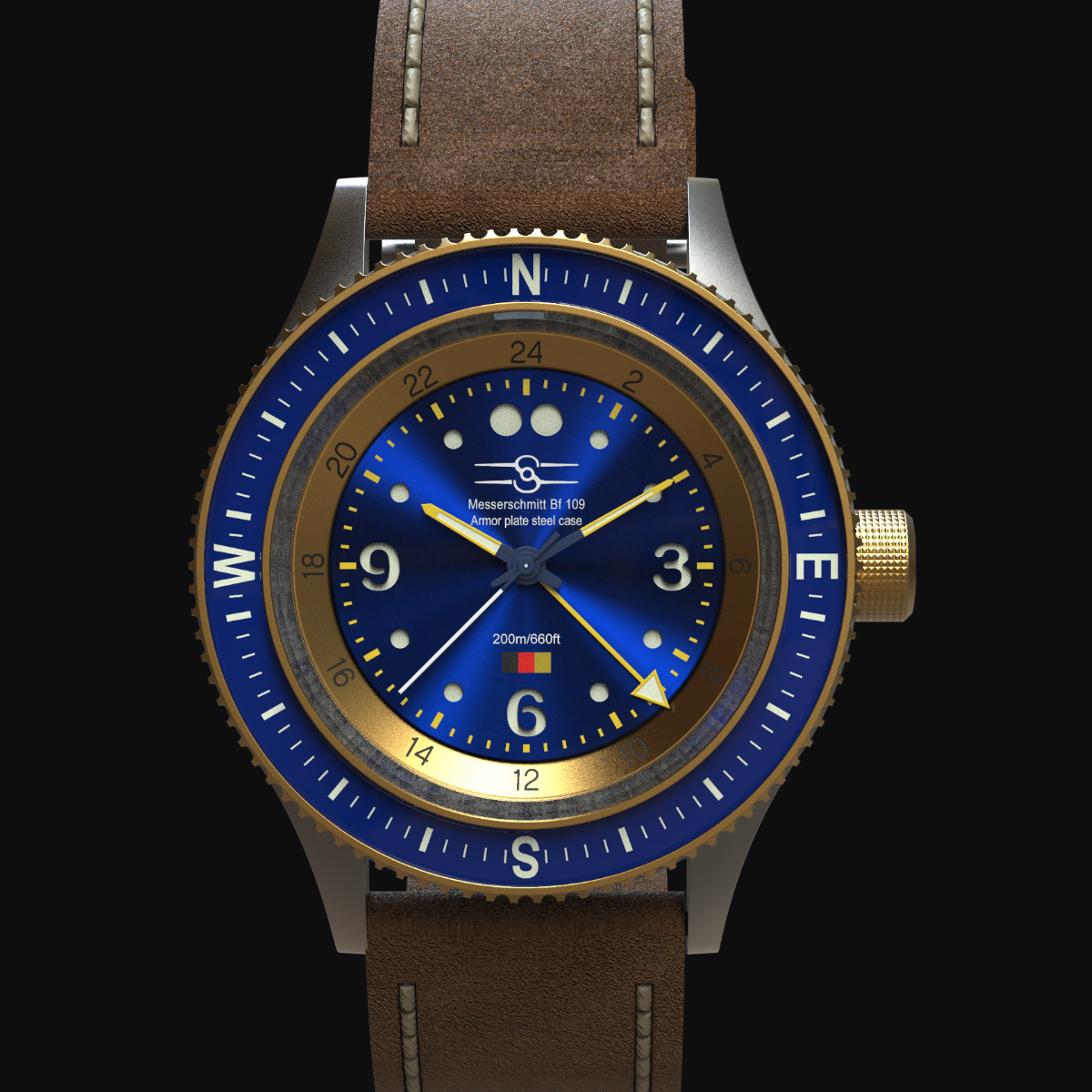
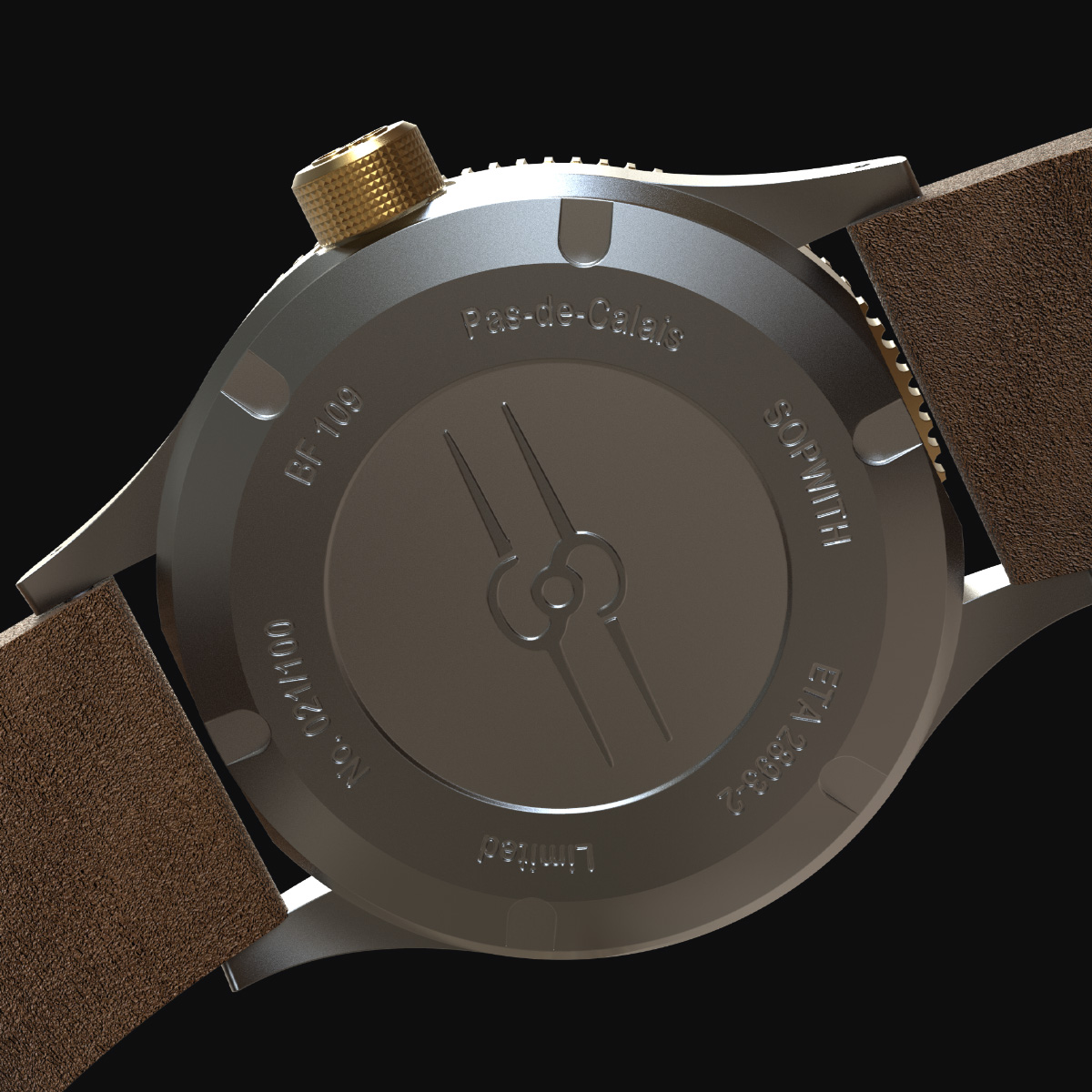
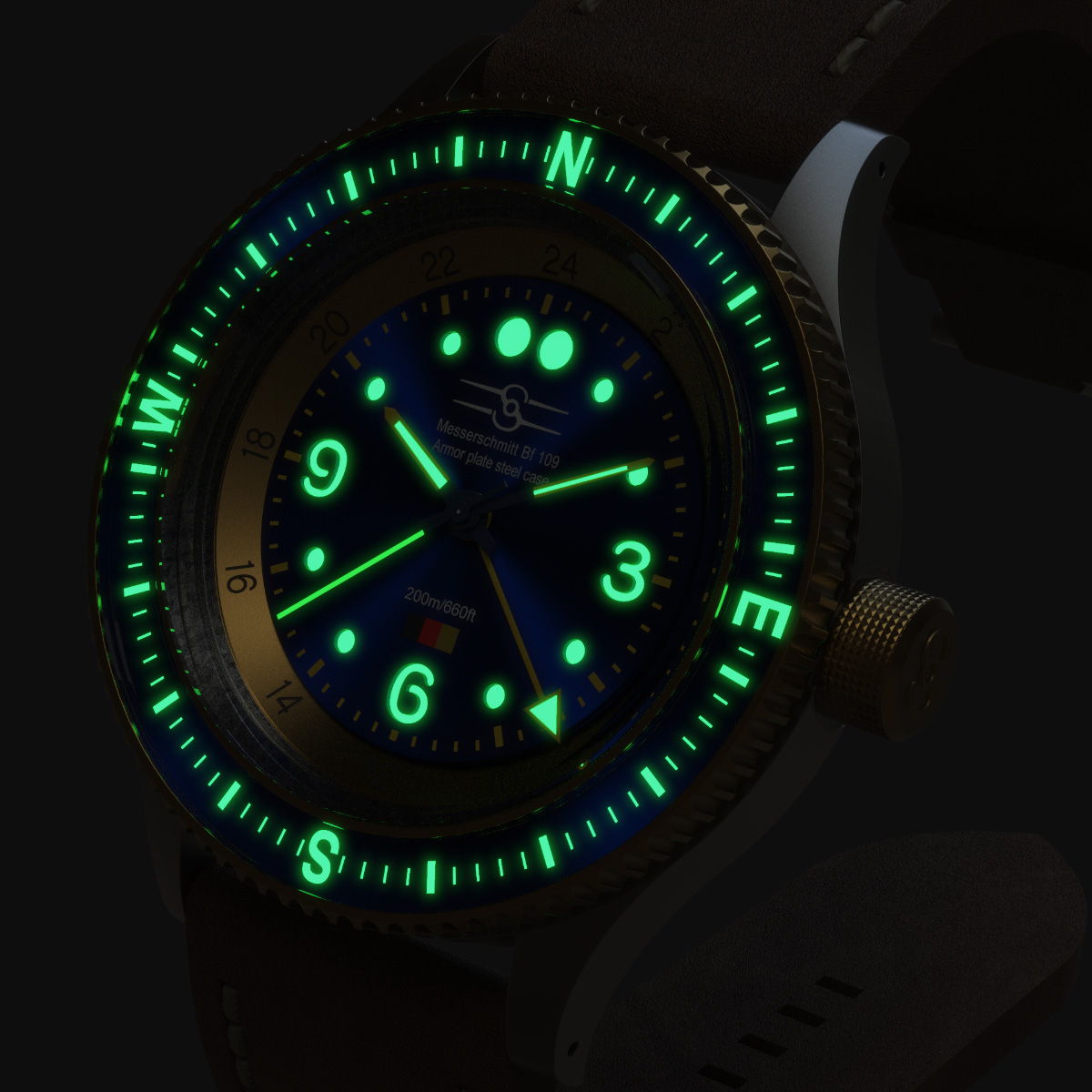
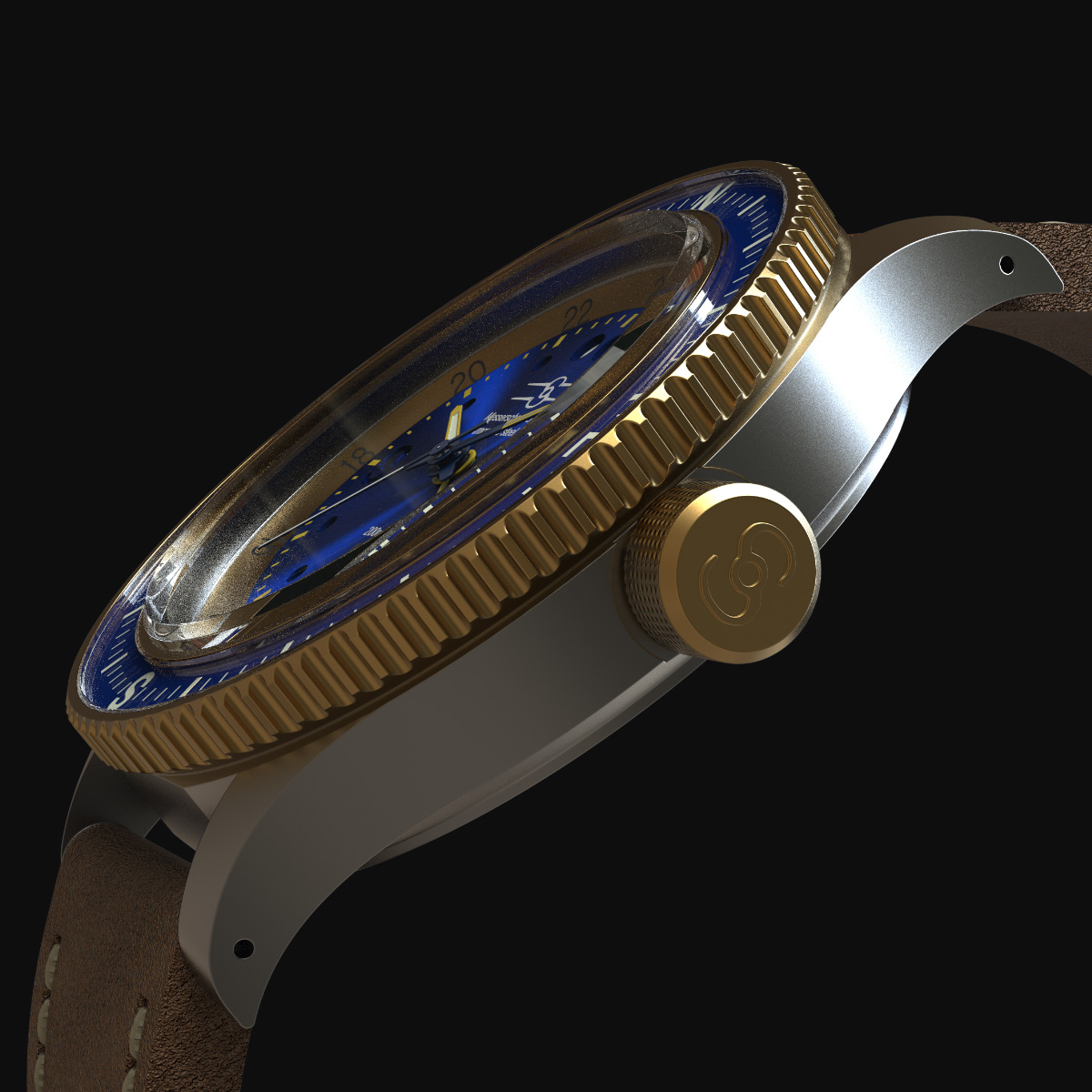
Messerschmitt Bf 109
Pas-de-Calais
Messershmitt Bf 109
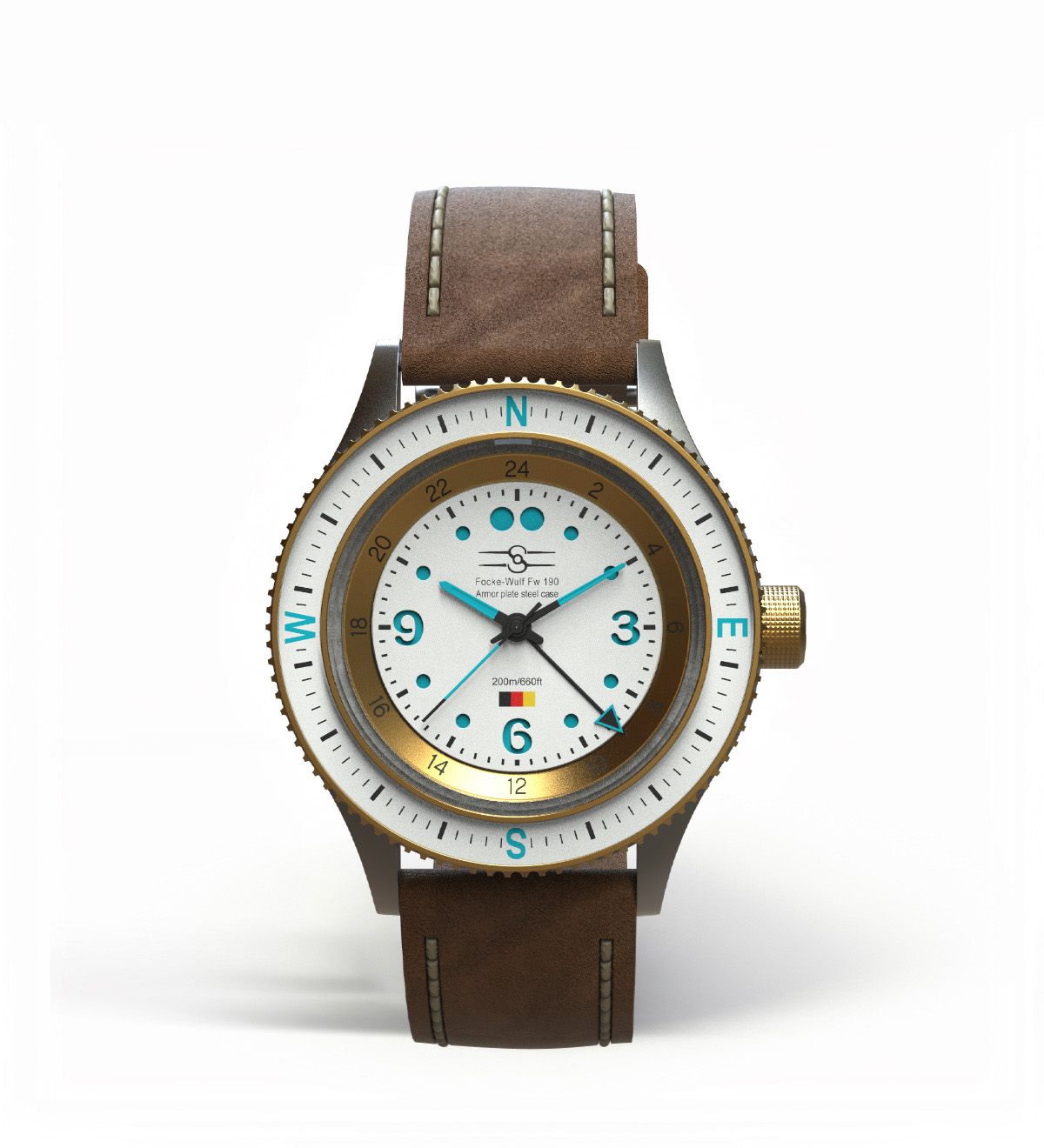
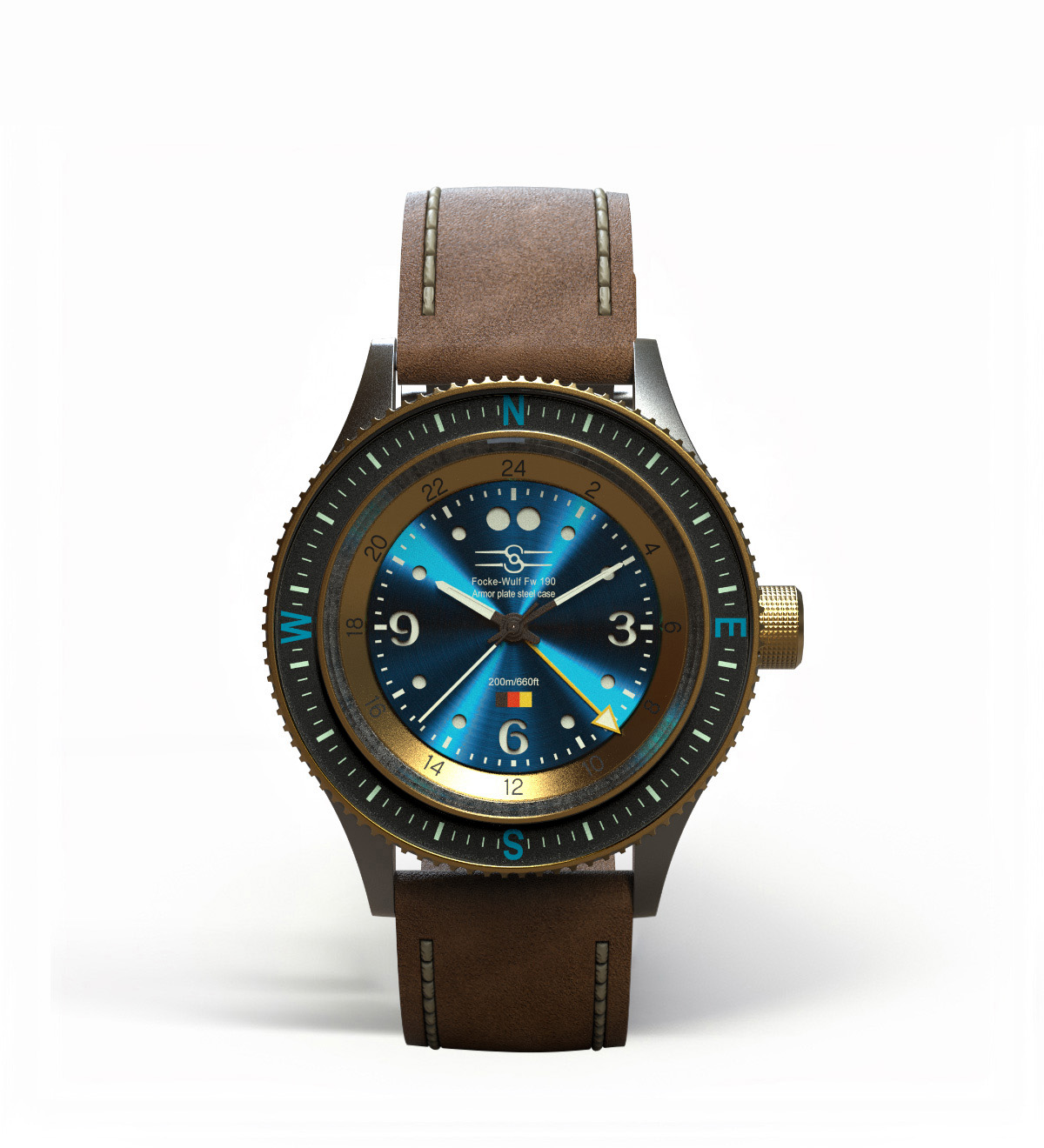
Case made from:
Cockpit armor plating
41 mm case
$4,600.00
| Movement | Swiss automatic, 42-hour power reserve |
|---|---|
| Case Size | Ø 41.00 mm |
| Water Resistance | 200 meters |
| Strap Material | Stitched, hand-cut Horween leather |

Sopwith Aero Marquis
Pas-de-Calais Series – Messerschmitt Bf 109 Limited Edition
Written and researched for Sopwith Watch Company by Barrett Tillman, award-winning author of “The Dauntless Dive-Bomber of World War II,” “When the Shooting Stopped: August 1945,” and more than 40 other books on World War II and the VietNam conflict
The air war in the west lasted five years, from the Battle of France in May 1940 to Germany’s defeat in May 1945. In that period the Luftwaffe’s fighter force, the Jagdwaffe, flew a succession of Messerschmitt 109s, from the early-war E model (“Emil”) to the F (“Friedrich”) in 1941 and ultimately the definitive G (“Gustav”) series from early 1942. Yet despite their high performance, all were relatively short ranged.
For the first four years, air operations often focused on the English Channel front for local control over France and Belgium. The blue waters of the Channel provide a tangible link to the steel cases deep color combination of Sopwith’s Pas-de-Calais edition of the Aero Marquis. Much of the Kanalkampf occurred near the French coastal region of Pas-de-Calais, site of the Allied deception to convince Germany that the narrowest part of the Channel would be the site of the inevitable 1944 invasion — only 21 miles from Britain.
During the Battle of Britain, Bf 109 pilots sweated out their gasoline supplies, often flying eastbound over the Channel toward France with their low-fuel warning lights blinking. The Germans shared the response with every other pilot who flew single-engine aircraft beyond land — trying to avoid looking at the fuel gauge while knowing the effort was wasted.
Meanwhile, Messerschmitt 109 units coped with a variety of challenges facing British and American aircraft armament. One pilot in particular was noteworthy for his fame and influence.
In July 1941 Oberstleutnant (Lieutenant Colonel) Adolf Galland of Jagdgeschwader 26 was barely recovered from a cranial wound when he impulsively strapped into his Bf 109F, banging his head on an unauthorized armor plate. His crew chief, Unteroffizier (Sergeant) Gerhard Meyer, had taken it upon himself to suspend the plate from the top of the canopy, protecting the pilot’s head from behind. Though displeased with the addition, Galland led the interception, downed a British bomber for his 79th victory and was then promptly riddled by a Spitfire.
Upon landing, the wing commander examined the non-regulation plate. The rear face was pitted with fragments from a 20mm shell that exploded behind the seat. Colonel Galland granted Sergeant Meyer special leave and a cash reward for saving the Kommodore’s life. This plate was then retrofitted to other 109s and dubbed the “Galland window.”
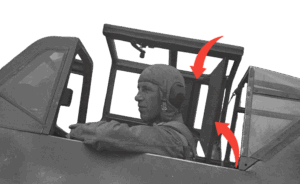
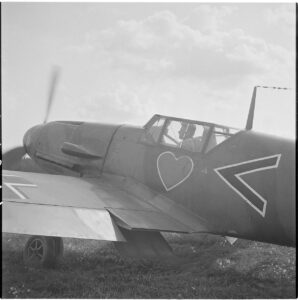
The case of the Pas-de-Calais Limited Edition of the Sopwith Aero Marquis is rescued from the unsalvageable steel of the armor plating immediately behind the pilot’s seat. (See photo)
By the spring of 1942 the Bf 109G in its many subsequent variants became the mainstay of the Luftwaffe’s fighter arm. The “Gustav” possessed extensive armor plating, notably a 60 mm (2.3 inch) thick bullet-resistant glass windscreen. Additional protection included a 10 mm (0.4 inch) steel plate for the pilot’s head; and 4-to-8 mm (0.15 to 0.30 inch) steel plates on the seat.
Aside from rubberized self-sealing fuel tanks, the main tank mounted a 21 mm (0.82 inch) steel plate at the rear with 4 mm plates on the sides.
Luftwaffe aircraft faced a variety of ammunition from Allied aircraft, ranging from the British .303 caliber to the standard U.S. .50 caliber and 20mm cannon in many Royal Air Force fighters plus the Lockheed P-38 Lightning.
A typical RAF .303 armor-piercing round was expected to defeat 7 to 10mm (0.27 to 0.39 inches) of hardened steel from 300 yards.
The American M2 .50 caliber round was produced in ball, armor-piercing (AP), armor-piercing incendiary (API), and tracer versions. Most potent was the AP projectile, which could penetrate almost an inch of face-hardened steel from 200 yards. The .50 AP could punch through engine blocks and frequently severed airframe components such as wing spars with catastrophic results.
In growing strength, in 1942 U.S. Eighth Air Force bombers shifted from Channel ports and rail yards to begin penetrating German controlled airspace over Occupied France and into Germany itself from 1943. Typically a 12-plane squadron of Boeing B-17 Flying Fortressess or Consolidated B-24 Liberators flew “combat boxes” spaced laterally and vertically. At full strength, three squadrons comprised a group of 36 “heavies” with overlapping fields of fire from ten machine guns per aircraft. The result was an awe-inspiring display of three-dimensional firepower as tracer rounds criss-crossed the atmosphere.
A 98-plane Experte, (“Expert,” a high-scoring fighter pilot) Oberstleutnant Gustav Rodel – a veteran of the Eastern Front – claimed 12 Viermots in the west. He recalled,
I survived more than 1,000 missions, but attacking four-engined bombers flying in formation still remains a nightmare in my memory. Each attack had a different pattern. There were too many odds and unknown factors during an approach such as weather, the counter-action of the fighter escort, and the difficulty in maneuvering in a large formation. The sole aim of the flight leader was to get his formation into a position that allowed a virtual collision-course attack. Thereafter, it was every pilot for himself.
One among many Luftwaffe pilots on the receiving end of .50 caliber ammunition was
Leutnant Franz Stigler, a 27-victory Messerschmitt pilot. On a 1943 mission he approached a B-17 from astern, and the tail gunner put a .50 caliber round through Stigler’s windscreen, then the bullet shattered on the gunsight.
He survived the shoot down with a permanent dent in his forehead. As Stigler often bemoaned, “Dot’s how I learnt you don’ attack a B-17 from behint.”
On a typical day against heavy bombers in 1943, forty percent of German fighters struck by U.S. gunfire were able to return, some damaged so badly that they had to be scrapped. The armor installed on German fighters had proven its worth.
Sopwith Watch Company supports the restoration of historic aircraft. The armor used in making this product was unsalvageable and obtained for the express purpose of providing extremely rare timepieces for clients who value quality and rarity in one unique product.
Image credits: SA-Kuva
Related products
-
Limited to 55 watches.
-
Limited to 55 watches.
-
Limited to 98 watches.