Focke-Wulf Fw 190
Arctic Sea
Focke-Wulf Fw 190
Case made from:
Cockpit Armor Plating
41 mm case
$4,900.00
| Movement | Swiss automatic, 42-hour power reserve |
|---|---|
| Case Size | Ø 41.00 mm |
| Water Resistance | 200 meters |
| Strap Material | Stitched, hand-cut Horween leather |

Sopwith Aero Marquis
Focke-Wulf Fw 190 Series
Arctic Sea Limited Edition
Written and researched for Sopwith Watch Company by Barrett Tillman, award-winning author of “The Dauntless Dive-Bomber of World War II” and more than forty books on World War II aviation.
Among Luftwaffe fighters, the northern front belonged to Jagdgeschwader Five (JG 5), the Eismeerjäger or “Arctic Sea Hunter” wing.
The Geschwader was established with three Gruppen formed during the first half of 1942, all intended for the northern front. The original full-time Kommodore was Major Gotthard Handrick, one of the Luftwaffe’s most intriguing personalities. A versatile athlete, he won the gold pentathlon medal in the 1936 Berlin Olympics, becoming the first non Swedish champion of the modern era since 1912. He had been a soldier since 1929, and in 1937 to 1938 he became a Condor Legion ace in Spain.
Following spectacular success in Operation Barbarossa, the invasion of the Soviet Union in June 1941, Luftwaffe units struggled to operate that winter. The original Eastern Front strength of some 2,000 aircraft quickly dwindled as pilots flew in poor to dangerous weather, and ground crews worked in miserable conditions, battling Arctic temperatures usually in the open. By year end the Luftwaffe had lost more than half its original Ostfront strength while sortie counts plummeted. Aside from combat and operational attrition, other German aircraft were grounded with weather-damaged aircraft and inoperative engines.
Although JG 5 originally flew Bf 109s, it was foremost a Focke-Wulf 190 unit. Its Gruppen and detached Staffeln flew from numerous bases, notably Trondheim, Stavanger-Sola, Kjevik and Forus in Norway; and Petamso in Finland.
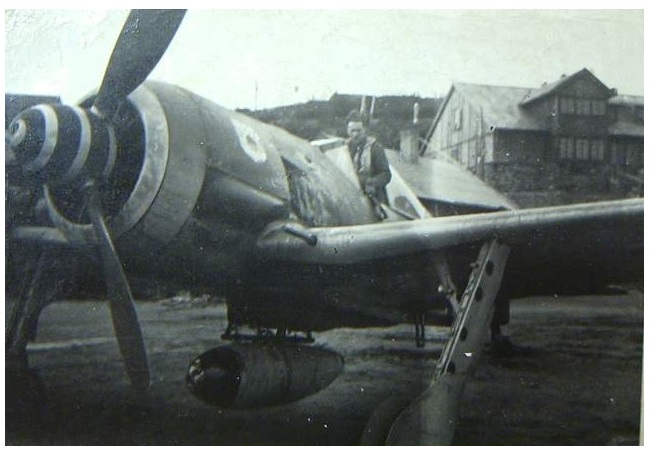 In temperatures reaching -40 degrees Fahrenheit, mechanics tried various methods of keeping their planes airworthy. Maintenance was a constant battle as engines were balky to start with frozen or coagulated oil and even frozen fuel. Diluting oil with gasoline was only occasionally effective, with danger of engine fires, and improvised shelters were too few. Additionally, at some bases Staffeln removed landing gear doors to reduce the cumulative effects of mud and slush.
The Eismeerjäger pilots faced a wide variety of Soviet-built and Lend-Lease aircraft including Yaks, LaGGs, Pe-2s, Il-2s, Hurricanes, P-39s and P-40s.
Russian fighter aircraft typically mounted both cannon and machine guns, as did Germany’s and Japan’s. The usual weapons, as in the much-produced Yakovlev series, were a nose-mounted cannon with two rifle-caliber machine guns. The 20mm ShVAK cannon’s standard projectile was able to defeat 10 to 15mm (0.39 to 0.60 inches) of homogeneous armor at close ranges.
Twin 7.62mm ShKAS machine guns generally augmented the cannon. Armor-piercing rounds were rated to penetrate 11mm (0.43 inches) of armor at 400 meters.
Seven of the wing’s Experten claimed more than 100 kills, in whole or in part with JG 5. They were led by three super aces, each with more than 200 career victories and surprising consistency within the wing: Major Heinrich Ehrler (208 total, 197 with JG 5 and a one-day record of 7); Major Theodore Weissenberger (208 total, 195 with JG 5 and a one-day record of 7); and Oberleutnant Walter Schuck (206 total, 198 in JG 5 with one-day records of 11 and 12.)
The Eastern Front became a study in three-dimensional Darwinism — survival of the fittest leavened with the ever-present element of chance. In northern latitudes both Axis and Allies welcomed the spring thaw pointing toward summer. With more daylight hours, flying increased but so did combat exposure.
The best weather was May through September although Theodore Weissenberger, for instance, only scored 85 of his 200 Eastern Front victories in those months.
Contrarily, Heinrich Ehreler’s victory dates are incomplete, but at least 114 of his 200 Eastern Front kills came between May and September.
The wing’s genealogy was complex. In early 1942 some III Gruppe squadrons were detached to or derived from units in Western Europe, attended by redesignations that were common within the Luftwaffe. Some of those units covered the Kriegsmarine’s February “Channel Dash” with battleships Scharnhorst and Gneisenau, plus escorts, running the narrows en route from France to Norway.
Subsequently Ehrler became Geschwaderkommodore in August 1944, though he inherited a significant deficit. For much of the time, his attention was focused on absorbing scores of new pilots with minimal training, requiring unit-level transition to the FW 190.
Additionally, the wing was inadequately informed of its task to defend Germany’s prize surface combatant, the battleship Tirpitz in Norwegian fjords. Since 1942 the Royal Air Force and Royal Navy had repeatedly tried destroying the 42,000-ton threat to Allied convoys in the North Atlantic. The British inflicted occasional damage but the ship remained afloat as a threat in being.
Eismeerjäger came to grief in November 1944 when RAF Lancaster bombers sank the Tirpitz in Tromsø fjord. Aside from losing the most prestigious ship remaining in the Kriegsmarine, about 1,000 sailors died as well.
Convicted at court martial for “cowardice,” “insubordination,” and “abnormal ambition,” Ehrler was reduced in rank and sentenced to three years in prison. His exceptional combat record probably averted a death sentence for “dereliction” in launching a belated interception of the British attackers. As it was, he became the meat in a political sandwich between rival service chiefs: the Luftwaffe’s Hermann Goring and Kriegsmarine’s Karl Doenitz.
Subsequent investigation exonerated the former Kommodore due to a perfect storm of communication failures including the navy’s lapse in reporting the ship’s new location.
With 200 credited victories, the super ace’s sentence was commuted by Adolf Hitler on March 1.
Ehrler returned to flying with assignment to JG 7, the leading Me 262 jet fighter unit. He was credited with eight victories in the “turbo,” running his total to 208 but he died on April 4, 1945, four weeks before Germany capitulated. Some of his pilots monitoring the radio heard him call, “Heinrich here. Have just shot down two bombers. No more ammunition. I’m going to ram. Auf Wiedersehen, see you in Valhalla!”
Heinrich Ehrler was 27 years old.
Of the leading JG 5 pilots, Theodore Weissenberger was killed in a racing accident in 1950, age 35. Walter Schuck died in 2015, age 94.
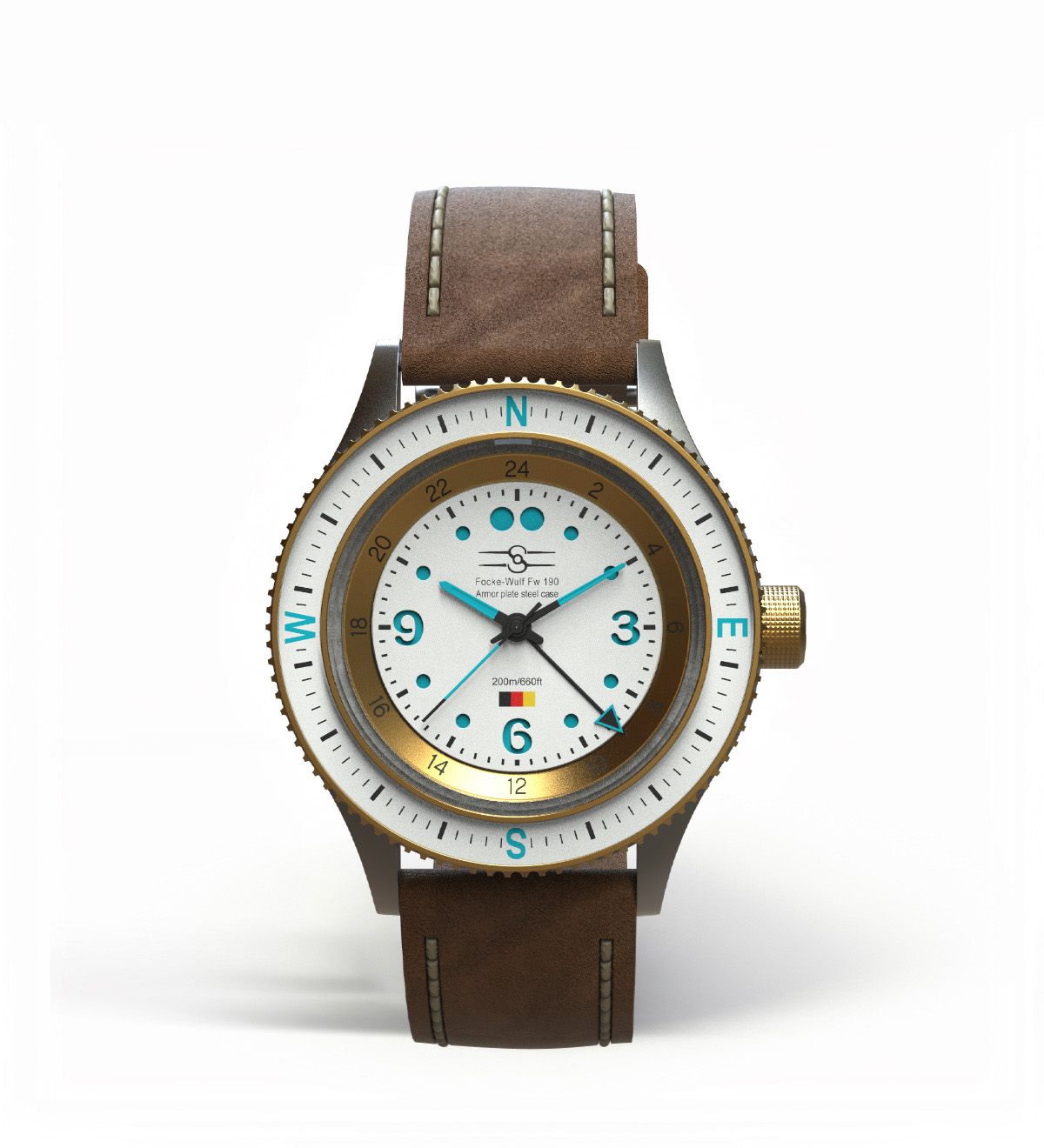
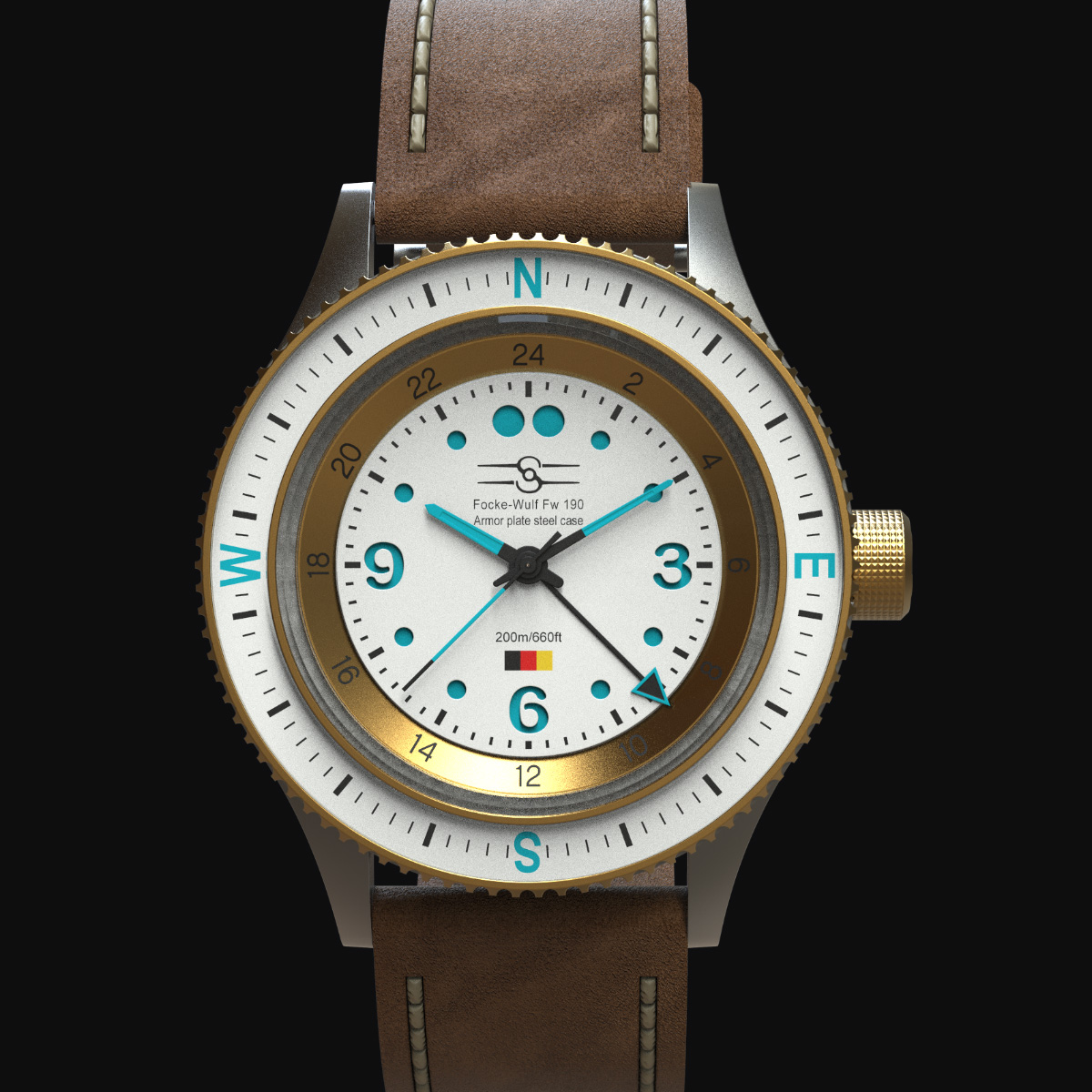
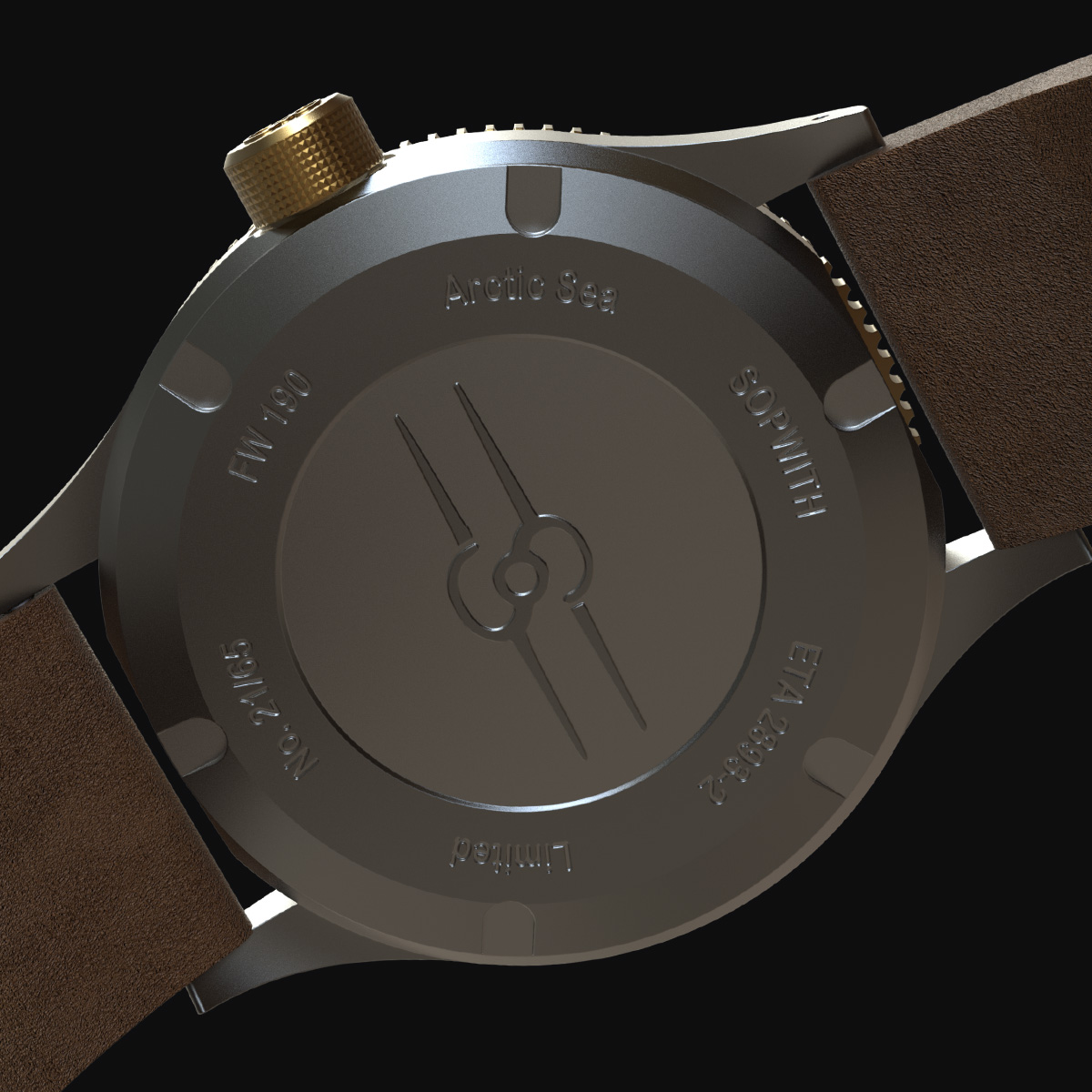
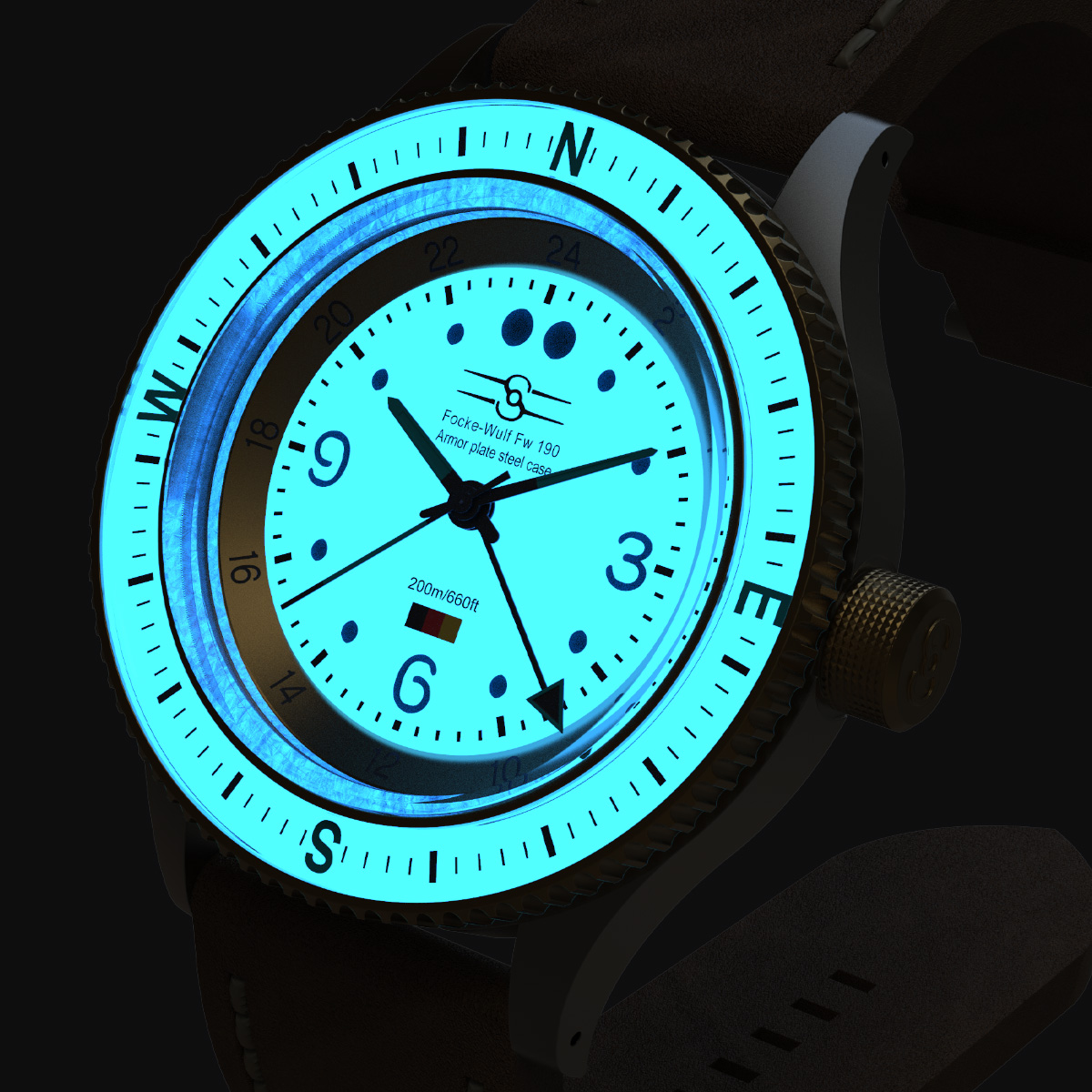
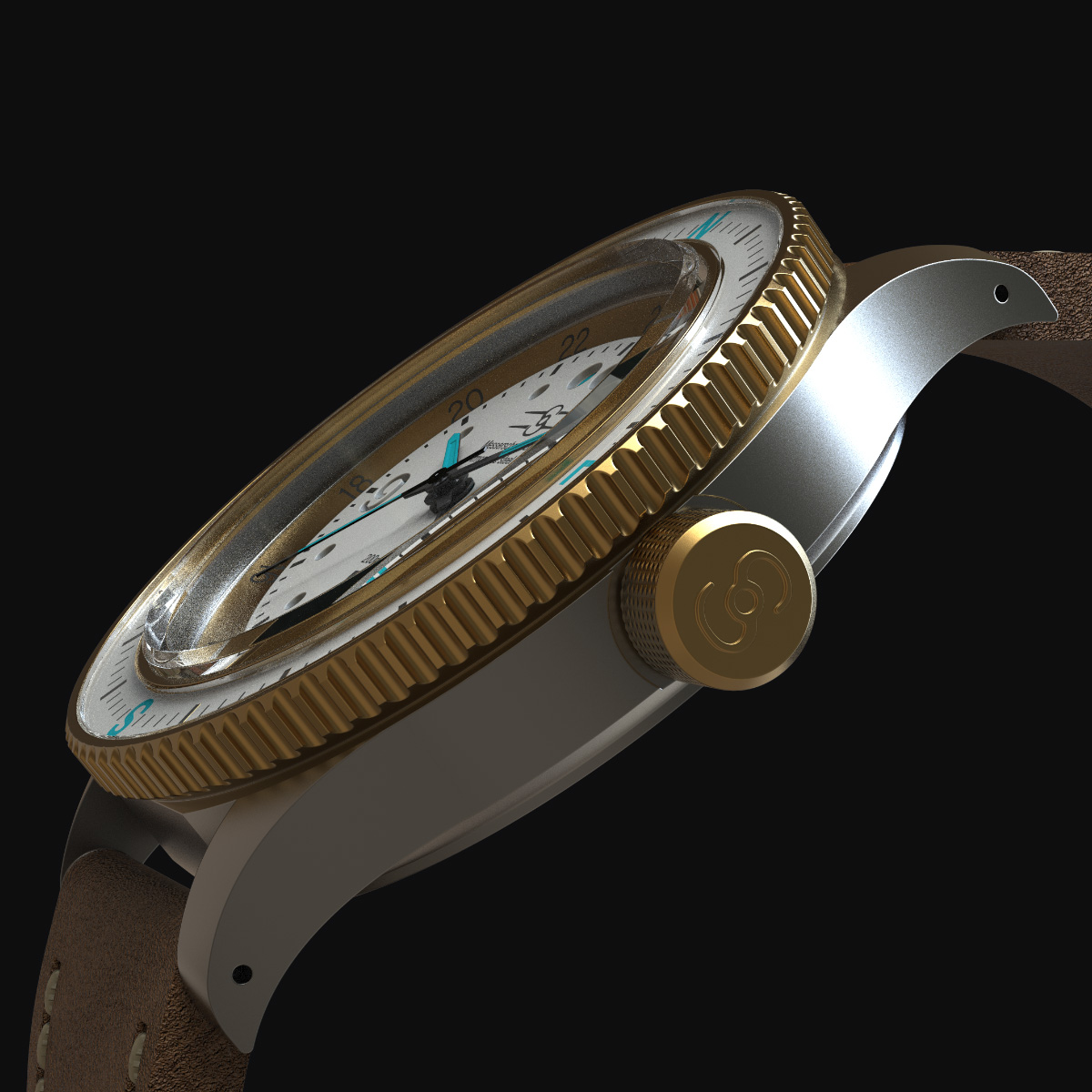
The Arctic Sea Limited Edition of the Aero Marquis is equipped with a snow white dial and rotating bezel, fully illuminated in ice blue, with a case made from the armor of an original Focke-Wulf Fw 190 fighter airplane.
Related products
-
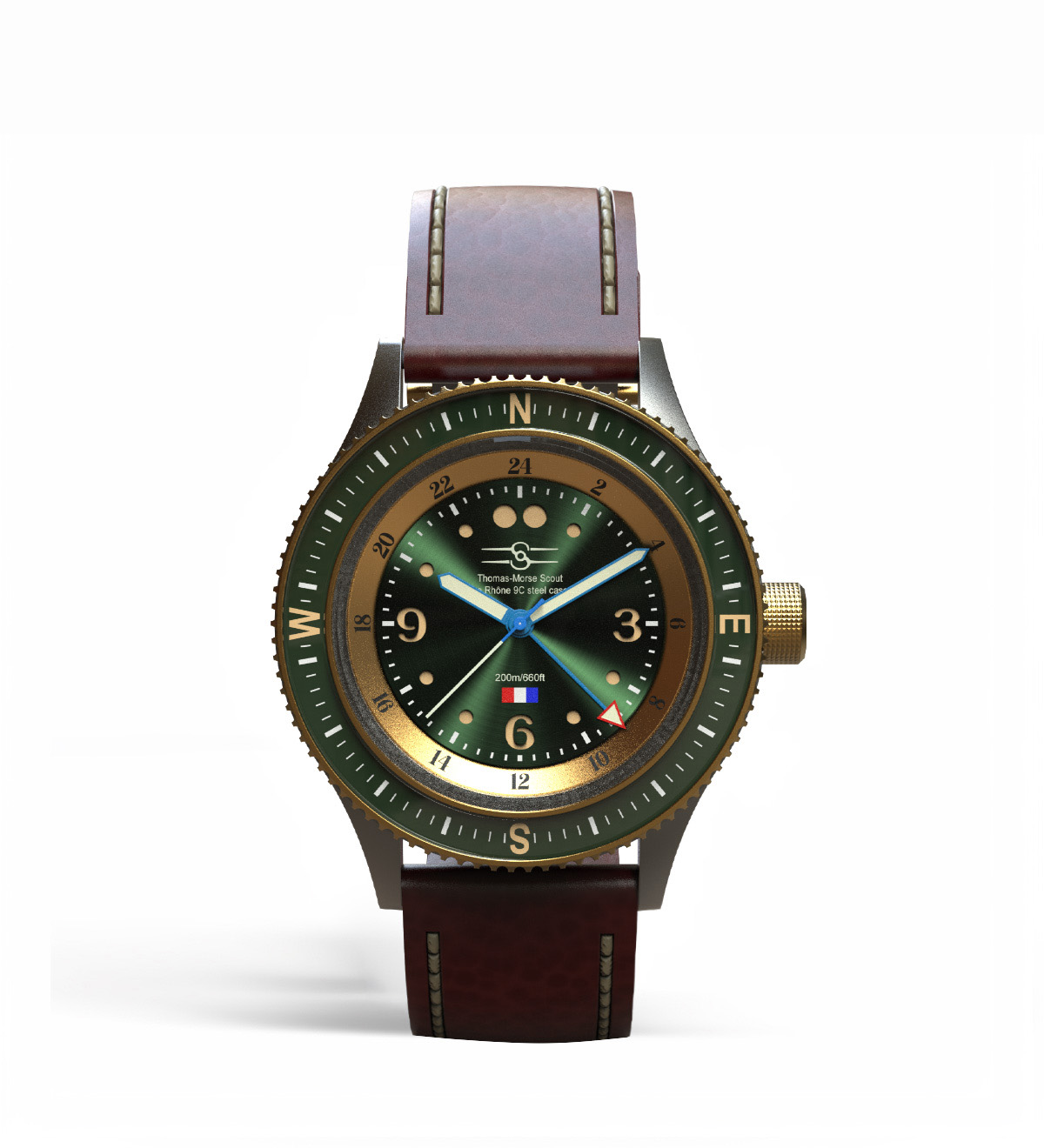
Limited to 30 watches.
-
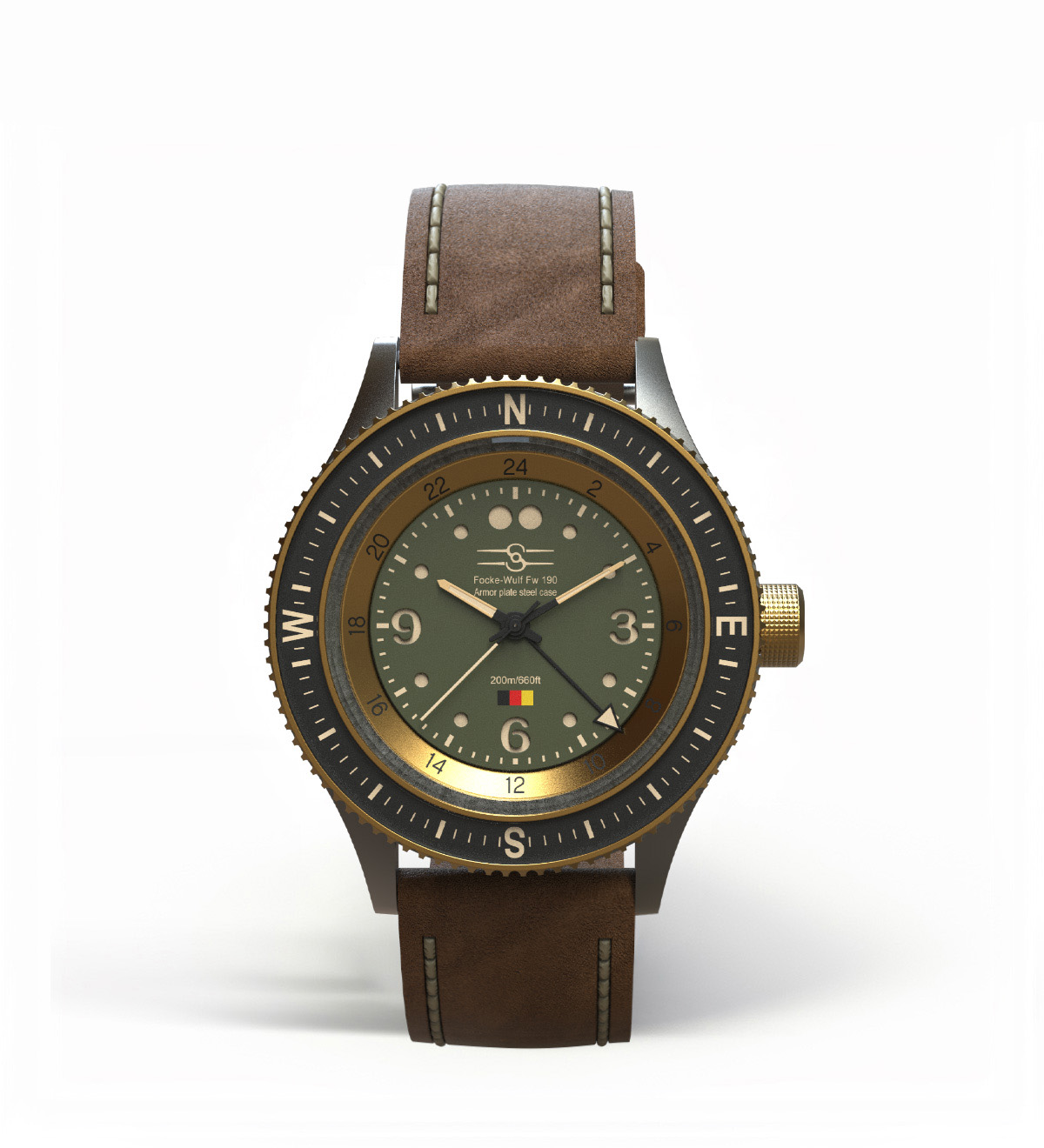
Limited to 53 watches.
-
Limited to 98 watches.