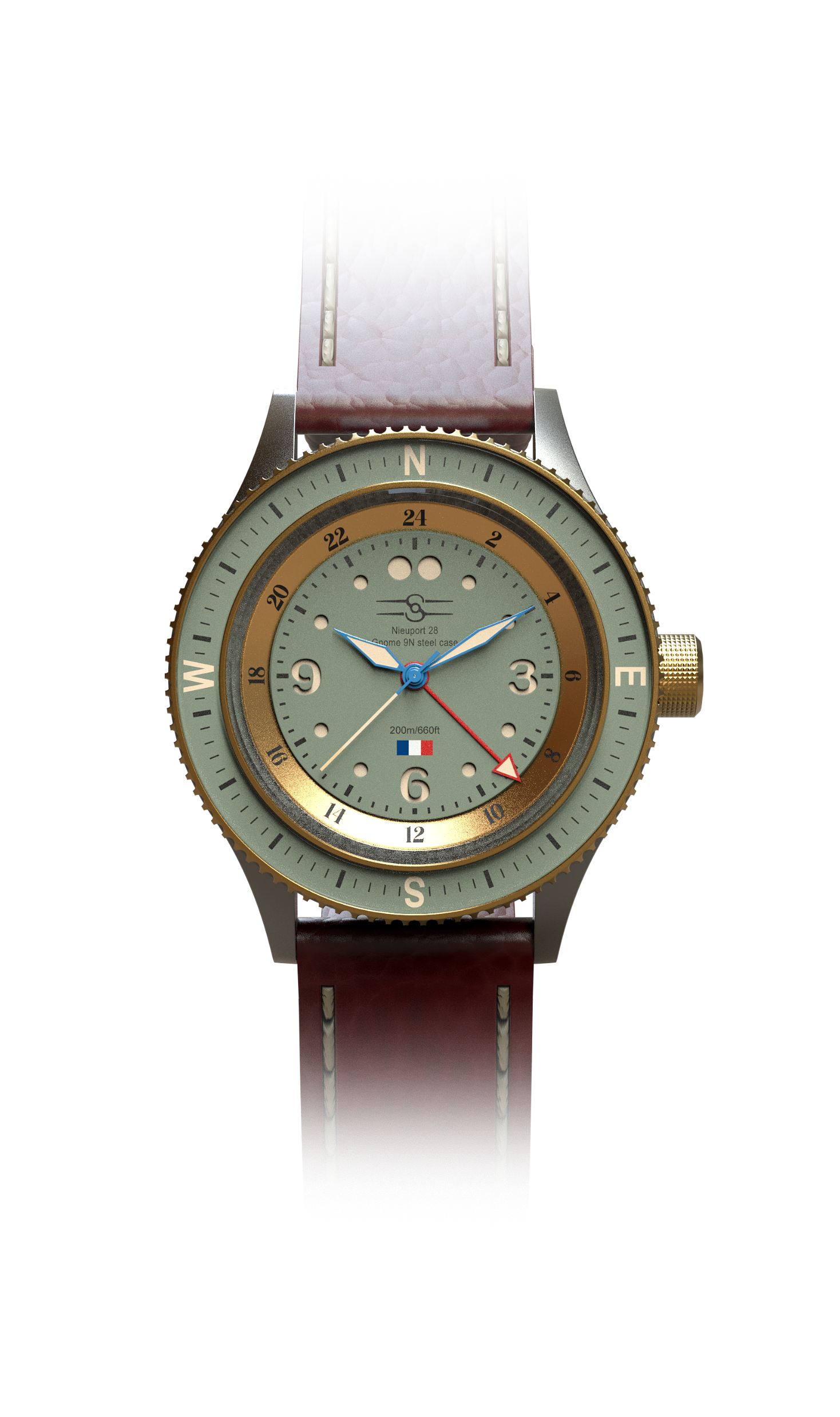
Forging History: Sopwith’s Revolutionary Metallurgical Standard
In a bold departure from traditional luxury watchmaking, the Sopwith Watch Company has introduced a proprietary method for repurposing historic steel—specifically reclaimed from World War I and World War II fighter aircraft—and upgrading it to exceed modern performance metrics. Unlike brands that simply incorporate historical fragments into a standard case, Sopwith reforges entire components, such as engine pistons and valve guides, in its dedicated Houston-based steel foundry.
The Proprietary Process vs. Industry Standards
Most major watchmakers utilize high-grade, off-the-shelf alloys like 316L or 904L stainless steel, mass-produced via CNC machining and hydraulic stamping to ensure uniform quality and corrosion resistance. These methods are efficient but they prioritize industrial efficiency.
Sopwith’s process, however, involves:
- Thermal Enhancement: Melting reclaimed historical steel and comparing its composition to modern aerospace benchmarks like AMS grade 5360.
- Hardening & Coating: Upgrading 20th century wartime steel to modern standards to ensure it is corrosion-free and wearable for a lifetime, often applying titanium carbide coating to enhance scratch resistance and durability.
By owning the entire metallurgical pipeline, Sopwith transforms brittle wartime artifacts into robust, luxury-grade timepieces that Oracle of Time describes as “living artifacts”. This creates a product where the history is not just a feature, but the very foundation of the watch.
Contact: Stephen Cox, president